
Protein Powder vs Whole Food: What Science Really Says
When it comes to building muscle, fuelling recovery, or simply making healthier choices, the question comes up again and again: protein powder vs whole food—which is truly better for your body? Is it worth investing in high-quality supplements, or will real food always come out on top? At Me Muscle Nutrition, we’re all about evidence, balance, and finding what works for real people. Let’s cut through the noise and give you practical, science-backed answers.
Why Does Protein Matter for Everyone?
Protein is the backbone of muscle, skin, hair, enzymes, and so many other vital systems in your body. It helps you recover after exercise, keeps you fuller for longer, and supports immune health at every age. According to Harvard Health, most adults need between 0.8–1.6g of protein per kilogram of bodyweight, with athletes and those in hard training at the higher end. (Harvard Health)
If you’re curious about how much protein is right for you, check out our Guide to Protein Intake.
Protein from Whole Food: The Complete Package
When you think of high-protein foods, you’re thinking of much more than just protein. Chicken breast, eggs, salmon, Greek yogurt, tofu, beans, lentils, and nuts also provide essential vitamins, minerals, healthy fats, and fibre. These all work together to help you recover, build muscle, and stay energised.
Why choose whole food protein?
-
More than just protein: Get iron, zinc, calcium, omega-3s, and B vitamins in every meal.
-
Fuller for longer: Whole meals with protein, fibre, and healthy fats curb appetite and support healthy weight management.
-
Gut and heart health: Many protein-rich foods also offer fibre and healthy fats.
-
Minimal processing: No artificial sweeteners, gums, or thickeners.
Need meal inspiration? Try eggs, salmon, Greek yogurt, tofu stir-fry, or a bean salad for your next protein-packed dish.
Want to boost your nutrition? See our Protein Collection and Healthy Snacks for convenient options.
For more on top protein foods, see Healthline: Best Protein Sources.
Why Is Protein Powder So Popular?
Protein powders—whey, casein, or plant-based options—are everywhere, and it’s not just marketing hype. They make it incredibly easy to hit your daily target, whether you’re a time-poor parent, a busy professional, or an athlete needing extra support.
Key benefits of protein powder:
-
Ultra-convenient: No prep, no mess. Perfect for on-the-go nutrition.
-
Quick absorption: Especially helpful after tough workouts for muscle repair.
-
Precision: Know exactly how much protein you’re getting every time.
-
Fits every diet: Vegan, dairy-free, and allergen-friendly formulas available.
Explore our best-selling Protein Powders and see why customers love options like X50 Organic Plant Protein or Primabolics Iso-Ripped V2.0.
Just be mindful of fillers, artificial sweeteners, or unnecessary additives—always choose trusted brands.
Looking for a recipe? Try our Protein Shake Recipe with Primabolics Iso-Ripped.
Protein Powder vs Whole Food: What Does Science Say?
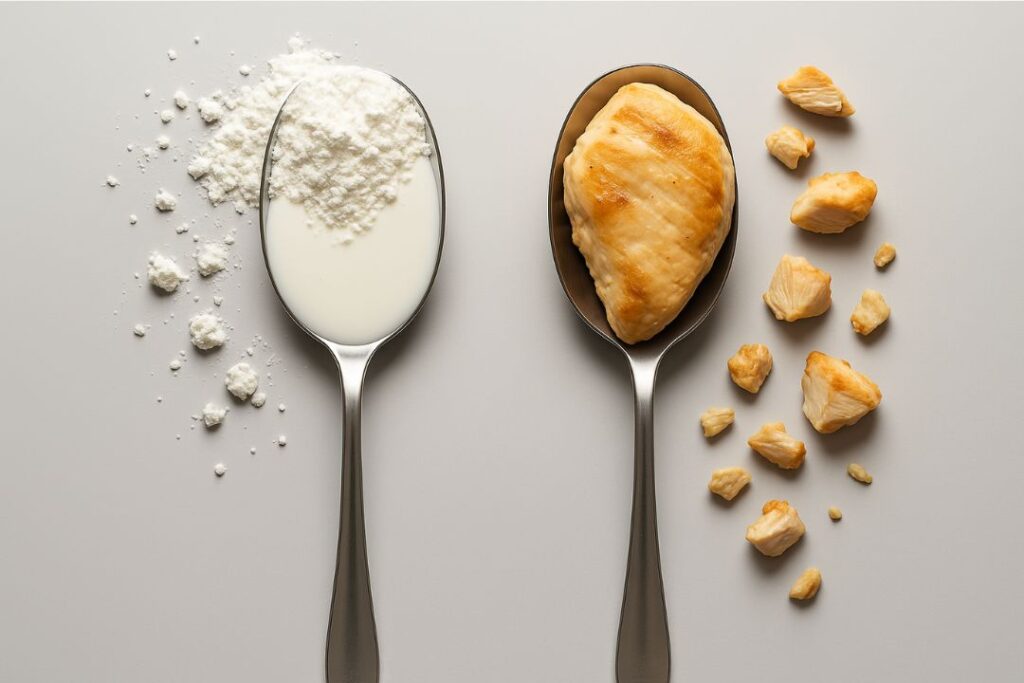
The big takeaway from modern research? Total daily protein matters most. Whether it comes from a chicken breast or a shake, your muscles care more about how much protein you get—rather than the source.
-
Muscle growth & recovery: Both options work if you get enough overall.
-
Complete nutrition: Whole foods offer vitamins, minerals, antioxidants, and fibre.
-
Convenience: Protein powder fills the gaps on busy days or post-workout.
A study by the NIH confirms that both food and supplements support muscle if protein needs are met (NIH: Dietary Protein and Muscle Mass). But remember, shakes alone can’t replace a varied, balanced diet.
For a breakdown of the best supplements for muscle and recovery, see our Top Supplements for Muscle Growth.
When Should You Use Protein Powder?
-
Right after training: Fast-digesting protein supports muscle repair.
-
Busy schedules: No time for a full meal? Shakes make it simple.
-
Higher protein needs: Athletes, teens, or anyone with higher requirements.
-
Special diets: Vegan or vegetarian? Protein powder can help cover your needs.
Find your fit in our Full Protein Powder Collection.
When Should You Stick with Whole Food?
-
Main meals: Protein-rich meals help with satiety and provide a wide array of nutrients.
-
Gut and heart health: Real foods offer fibre and healthy fats.
-
More variety: Enjoy the textures, flavours, and health benefits of whole foods.
-
Avoiding additives: No unwanted sweeteners or fillers.
Looking for tips on balancing protein with other nutrients? Read What Are Macronutrients and Micronutrients?
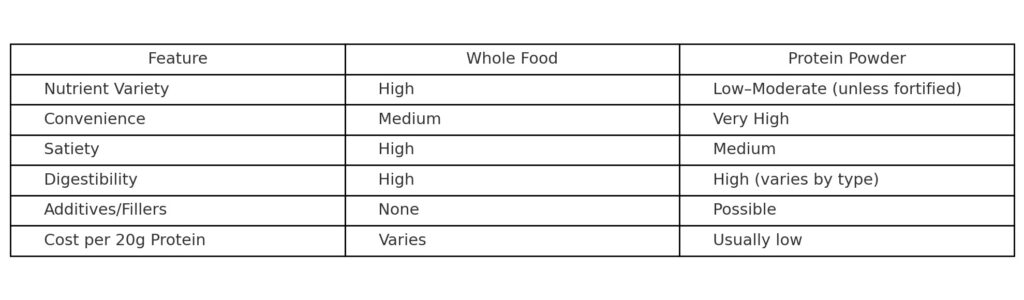
Quick Comparison Table
FAQs: Protein Powder vs Whole Food
Is protein powder better than whole food for muscle growth?
No—both can support muscle if you’re getting enough daily protein. Whole foods add extra nutrients and help with fullness.
Can I build muscle with food alone?
Absolutely! Many people never use protein powder. Supplements are just a convenient tool.
Is all protein powder safe?
Look for reputable brands, third-party testing, and simple ingredient lists.
Can I combine both?
Yes! Most people use whole foods for meals and protein powder for convenience or post-workout.
How can I tell if I need a supplement?
If you’re not reaching your protein target with food alone, or need a portable option, a good protein powder can help.
For more answers, check our Choosing the right Protein Powder
The Bottom Line
Protein powder vs whole food: both have a place in a balanced nutrition plan. Real food delivers more complete nutrition and keeps you fuller for longer. Protein powder is unbeatable for convenience and post-workout recovery. The smartest approach? Use a mix of both that fits your lifestyle, goals, and preferences.
Want advice for your next steps? Explore our full collection at Me Muscle Nutrition or contact us for personalised recommendations.
References & Further Reading
External (Authoritative Sources):